How to Make Your Farm Sustainable:
11 Lessons from Midigama Fruit Farm
Midigama Fruit Farm started with a sole focus on regenerative agriculture. After discovering that local demand for organic products didn't support a premium price point, they shifted their focus to agritourism. I had a call with Chathura Udayanga, one of the founders of Midigama Fruit Farm, and I visited the farm to learn about their sustainable practices.
April 28, 2026
1 Dragonflies: Biological Pest Control
Midigama maintains a dedicated dragonfly garden with clean, stagnant water features where dragonflies can breed and settle. It's worth the effort as dragonflies hunt hundreds of mosquitoes and flies daily, reducing the need for pesticides. Their presence is also a good sign: it indicates clean, chemical-free water and soil. This matters more than it might seem, as nearly 16% of dragonfly species face extinction due to habitat loss and pesticide use.
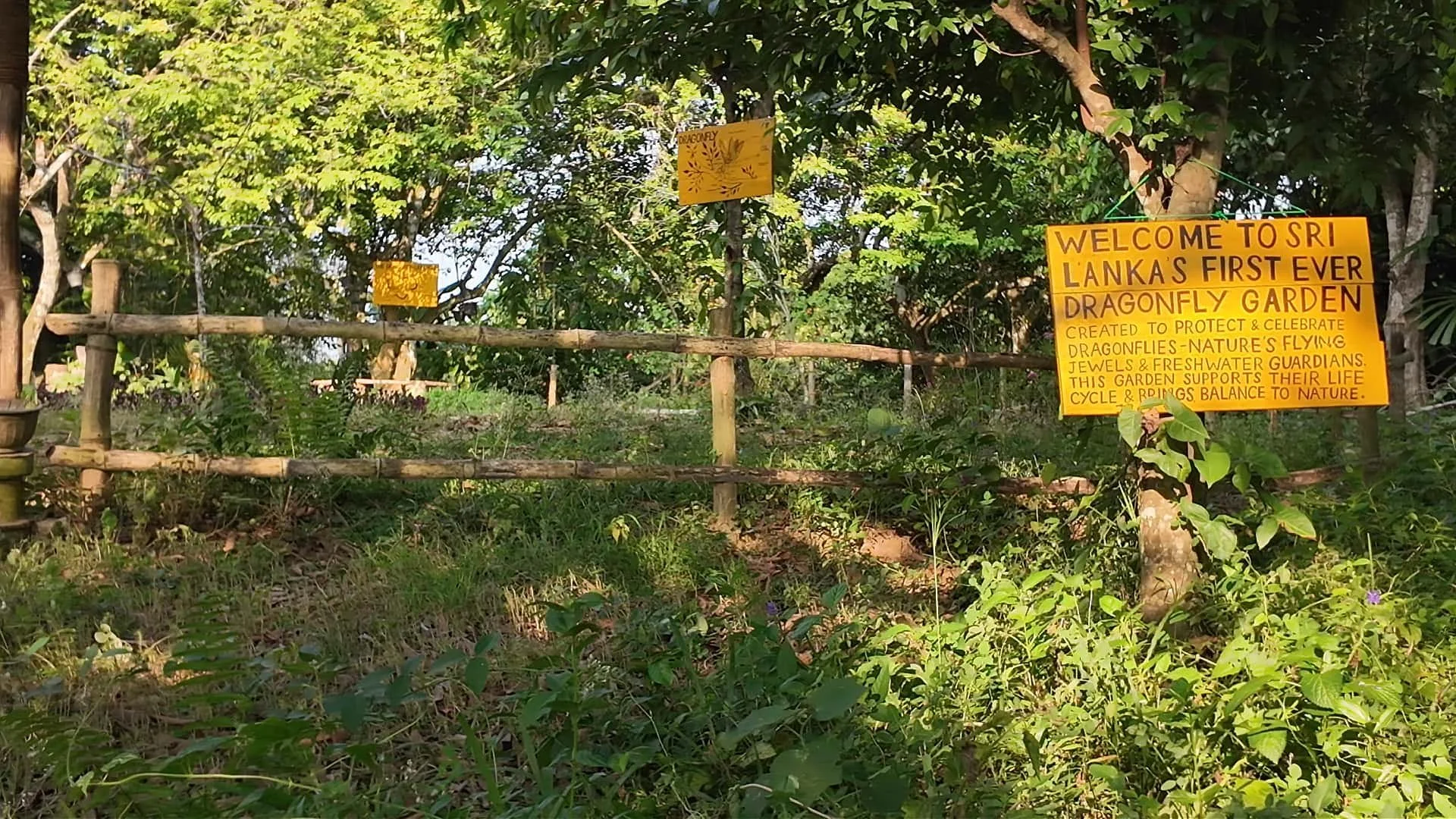
The dragonfly garden encourages breeding to boost local populations.
2 The Mud house: Low-Energy Living
One the farm they built a model mudhouse made from bamboo, coconut husk, and mud. These materials naturally retain moisture and stay cool, which means no air conditioning or electric fans are needed. The same mudhouse structure is used for their eco-kitchen, where they run cooking workshops.
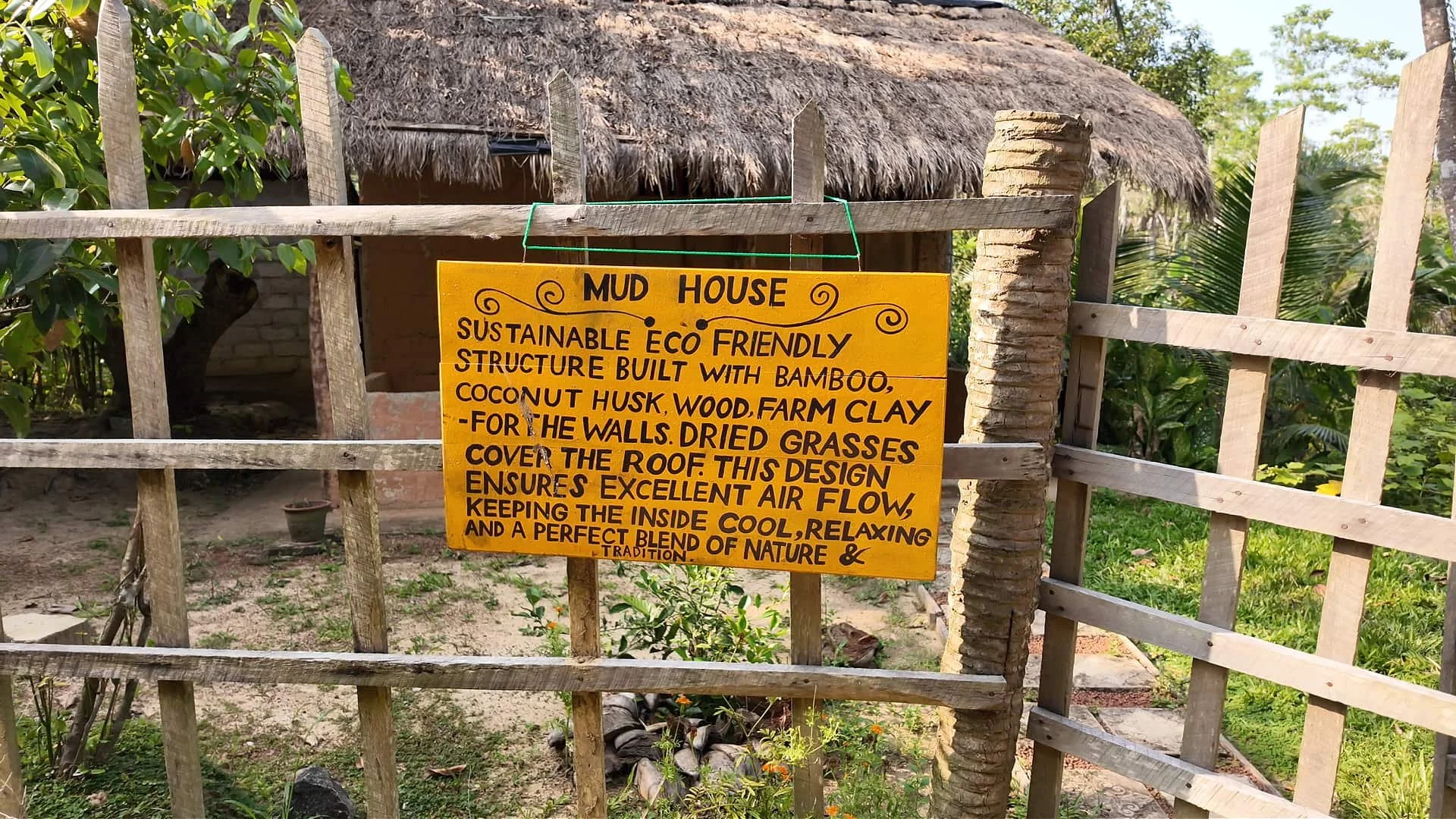
The sustainable mud house made from bamboo, coconut husk, clay and dried grasses.
Compost is what builds healthy soil for your crops. At Midigama, they make it by layering cow and goat dung with banana trunks and dry leaves. To speed up the four-month breakdown, they add old fruit cans from the land's history. These fruit cans house the specific microorganisms needed to kick off decomposition. Mixed into your beds before planting, it improves soil structure, helps the earth retain moisture, and releases nutrients slowly over time.
3 The Solid Foundation: Layered Compost
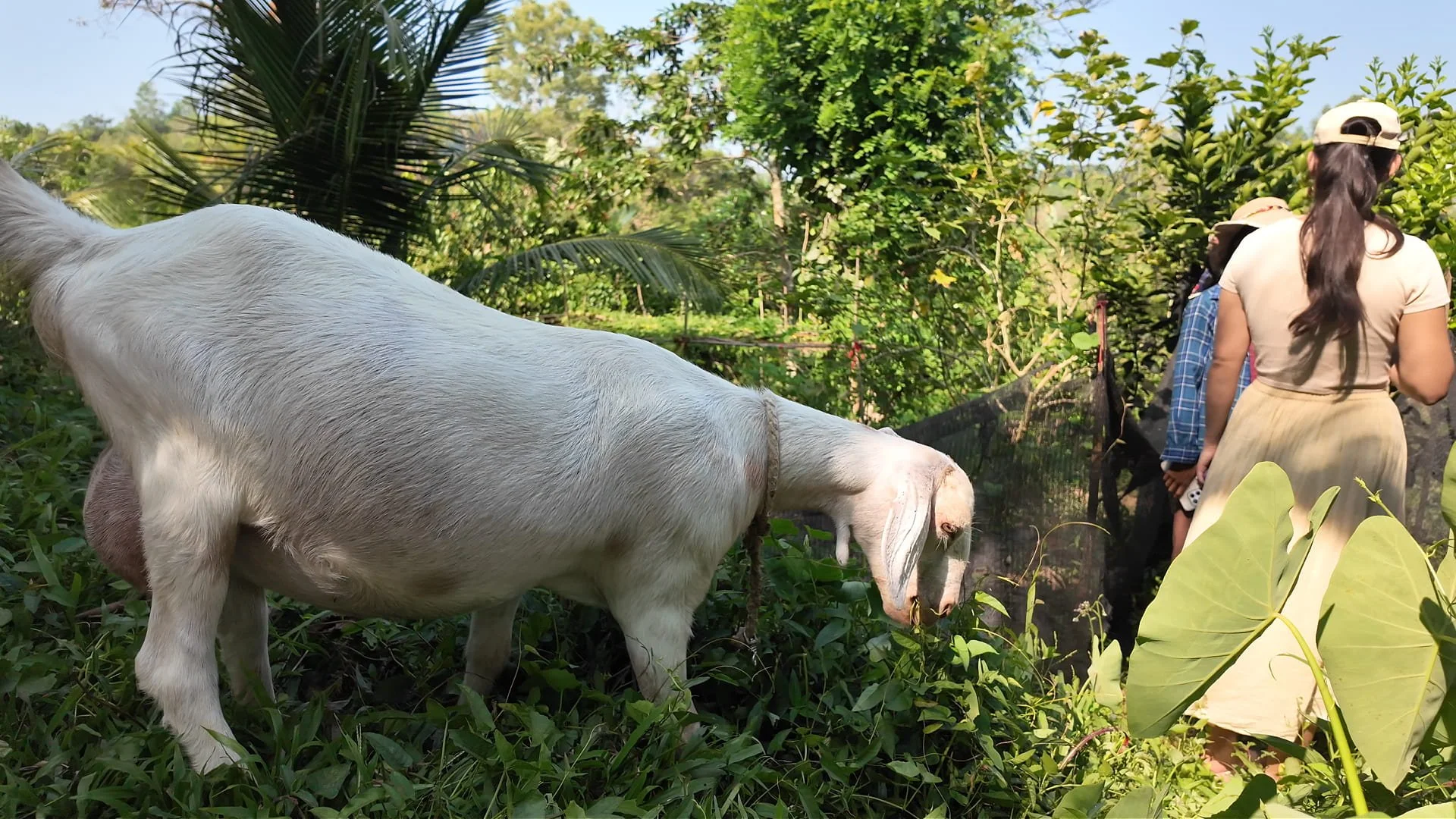
The farm has multiple goats that they use for goat milk and goat dung. This goat is pregnant.
When I asked if he wanted to sell value-added products in Colombo or even export them, Chathura was clear: for him and his co-founders, globalisation and sustainability don't go hand in hand. That means keeping the carbon footprint low and selling within a 25-kilometre radius. Since Colombo is more than 25 kilometres away, they are not selling their crops there. Experiences are mostly sold to tourists, while the crops go to locals.
4 Localisation
Think of liquid bio-fertiliser as a boost for young plants. This recipe uses nitrogen-rich Gliricidia leaves fermented with cow dung and water. You start applying the diluted mixture once your plant has its first true leaves, and continue until the first flower buds appear. Because the nitrogen is already broken down into liquid form, the plant absorbs it quickly and support the growth of big, deep-green leaves needed for a strong harvest.
5 The Growth Phase: Liquid Bio-Fertiliser
6 Companion Planting: The "Flower Power" Pest Control
One of the more visible ways the farm avoids pesticides is through companion planting. Marigolds are planted alongside vegetables, where they serve two purposes: they attract aphids (small sap-sucking insects that weaken plants) and beetles away from sensitive fruit crops, and their scent repels root-nematodes, microscopic worms that attack plant roots underground. At the same time, the nectar draws in ladybugs and parasitic wasps that keep the rest of the ecosystem in check, with no spraying needed.
For sensitive crops like bell peppers and salad cucumbers, Midigama uses a custom polytunnel. Acting as a physical shield, it removes the need for chemical pesticides, while the mesh diffuses intense tropical sunlight to prevent leaf burn. It also reduces water evaporation significantly, meaning more food can be grown on less land with fewer resources. It is a practical solution that works with the Sri Lankan climate rather than against it.
7 The Polytunnel: Precision Meets Sustainability
WORTH KNOWING
In the tropics, a glass greenhouse traps heat like an oven and needs constant electricity for cooling. A polyhouse is different ; it has a steel frame covered in UV-stabilised polyethylene mesh that allows natural ventilation and light diffusion. It protects plants from pests and heavy rain without any power consumption.
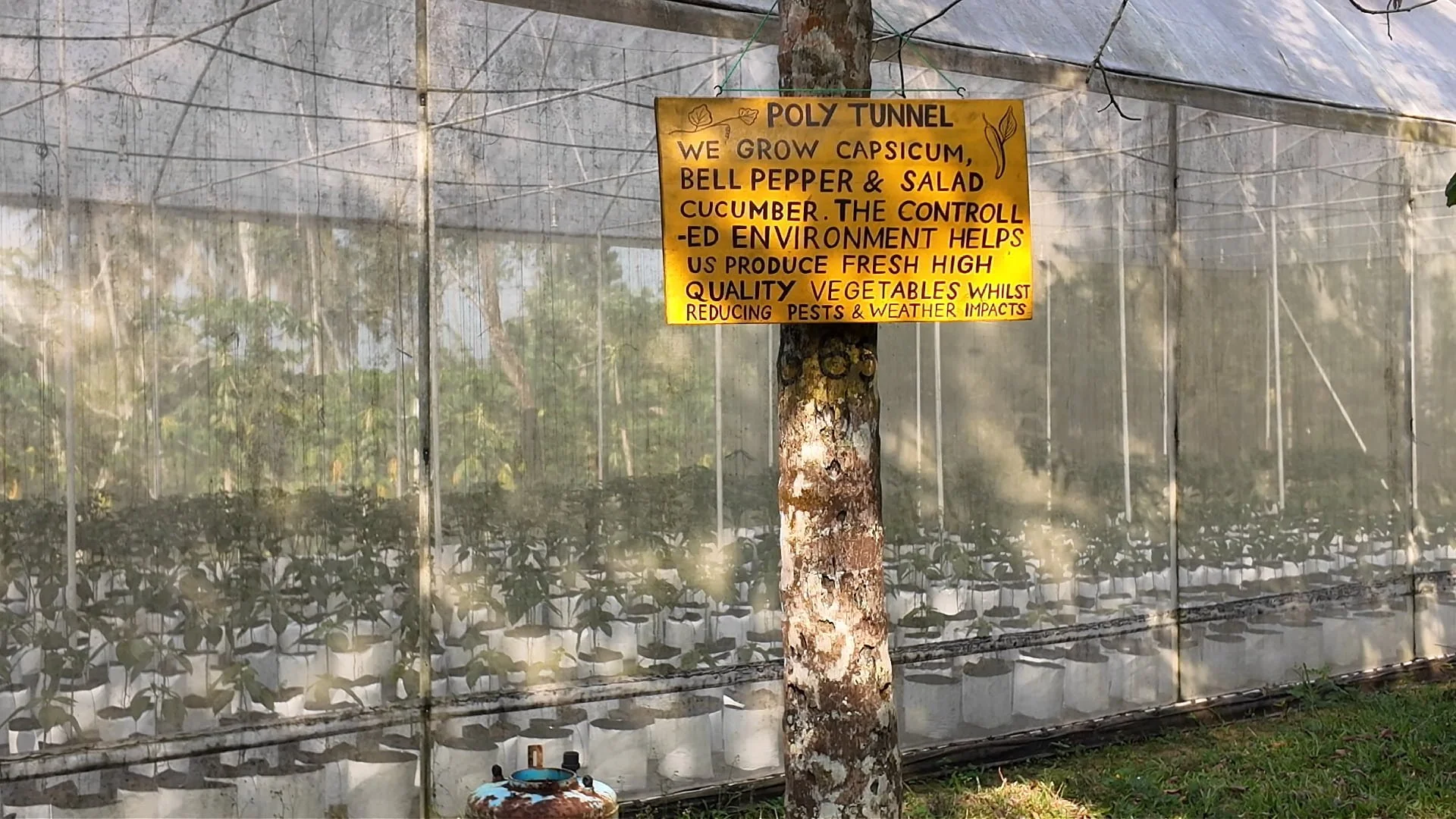
The polytunnel ensures a more steady environment to produce high quality crops.
Planting the same crop in the same spot season after season drains specific nutrients and gives pests a permanent home. At Midigama they rotate the crops as much as possible. For example, following a nitrogen-heavy leafy green with a root vegetable. This keeps the soil balanced and fertile, and breaks the life cycle of pests and diseases without chemical fertiliser.
8 Regenerative Farming: The Power of Crop Rotation
The farm encourages biodiversity by hosting what they call "bee hotels" - clay pots where wild bees naturally settle, rather than forcing a colony. Bees facilitate cross-pollination, which means higher yields and better-quality seeds without additional land or chemical fertilisers. They also support the reproduction of wild plants around the farm, which in turn provides food and habitat for other wildlife.
9 Bees: The Natural Pollinators
Clay honey pots provide a perfect environment for bees to settle and produce delicious honey while encouraging local pollination.
Fermented Plant Juice is designed to trigger a bigger harvest. You chop up banana flowers, mix them with sugar, and let the mixture sit for 21 days to extract the natural hormones from the banana flower. The moment you spot the first flower buds on your plants, you add FPJ. Banana flowers are rich in potassium and growth hormones that signal the plant to shift its energy from growing leaves to producing larger, sweeter, and more resilient fruits.
10 The Harvest Boost: Fermented Plant Juice (FPJ)
Walking through the farm, it doesn't look like a typical plantation with neat rows of a single crop. It looks more like a curated jungle, which is exactly what they are trying to achieve. Different species are planted together so they can support each other. Tall trees shade delicate herbs, while ground-cover plants keep the soil moist and prevent erosion. By mimicking the diversity of a natural ecosystem, the farm becomes largely self-sustaining.