Two Ways of Empowering Society Through Tourism
May 26, 2026
While many luxury lodges treat community engagement as a marketing checkbox, Tekanda Lodge and AMBA Estate are testing two distinct models of social integration. One focuses on institutional education; the other on entrepreneurial agency. Let’s see what they do and the difficulties they face.
If you first want some context, check out the intro of each agristay.
Tekanda Lodge
Tekanda Lodge sits in Kathaluwa, a quiet village just inland from the popular surf hub of Ahangama on the South Coast. When owners Richard and Charlie bought the land in 2016, the area had yet to become the tourist hots pot it is today. While tourists swarm the beaches, the inland villages remain filled with rice paddies, banana trees, coconut trees and modest houses. In the afternoon you’ll see children in white school uniforms walking along the road by themselves or an adult.
In Sri Lanka, education is a core pillar for social mobility. Parents who can afford it send their children to tuition (extra classes) to supplement their school learning. Currently, household income often relies on the men working; women in villages frequently face a lack of professional opportunities. Instead, they focus on childcare and managing home gardens, which provide fresh harvests for their own family’s consumption.
WORTH KNOWING
Since higher education is free in Sri Lanka and there are limited spots at top universities, you need to have very high scores on two main exams, O/Ls and A/Ls, to secure a spot. Besides public universities, there are private universities or schools, but villagers often can’t pay for those and solely rely on good grades.
Charlie, a former teacher, did not just want to enjoy the view from their luxurious cabanas, but wanted to do something that is closer to her heart. In 2023, they established the Tekanda Foundation, Gamata Athak: ‘A Hand to the Village.’ Acknowledging their lack of local developmental expertise, they partnered with The Foundation of Goodness (FoG) to ensure their foundation would not have to ‘reinvent the wheel’ of rural development.
For 400+ students from 30 villages, the Tekanda Foundation provides a structured path to joining the modern workforce:
For Children: English, Maths, Science, ICT, dance, chess, badminton, cricket and more.
For Women: Business class, dress making and commercial cookery aimed at financial independence.
For the Community: Care for elders, Sinhala and Tamil new year, and a preschool program.
WORTH KNOWING
Established in 1999, the Foundation of Goodness is a non-profit organisation providing essential support across education, sports, and environmental sectors. Instead of just offering aid, they focus on communal growth and vocational training through their 22 dedicated centres. To date, their initiatives have reached 1,200 villages, creating a structured path toward independence for women and local communities.
The Challenge of Conscious Integration
One of the challenges of starting a foundation in another country is balancing quality support with the operational costs of doing so.
Even though the couple only spends half the year in Sri Lanka, the centre operates smoothly under local managers. Their involvement is a choice, rather than a necessity. For Richard, this means dedicating more time to the Foundation than to the Tekanda Lodge—spending his hours coaching the girls' cricket team in Sinhala and focusing on the community’s privacy and progress, rather than simply ticking a commercial 'checkbox'.
Richard and Charlie are careful to ensure the centre remains a community space, not a "spectacle" for tourists. They don't allow tour agencies to visit and keep promotion at the lodge to a minimum. Even though they could likely secure more donations by marketing the Foundation, 'something would not sit right,' Richard shared. By prioritising impact over optics and maintaining a stable income from their patrons, they choose to focus on the community’s privacy over commercial promotion. Read more about the financial structure of the Tekanda Foundation and the Tekanda Lodge.
Located in Uva province - Sri Lanka’s poorest province in 2006 when Simon and his co-founders bought the land - AMBA Estate feels a world away from the nearby tourist hub of Ella. The final 15 minutes of the drive are spent on a narrow, winding road where you must honk at every blind corner. You pass through a tiny village of modest houses and buffaloes before reaching the estate, which still houses a 100-year-old colonial farmhouse.
However, the weight of history remains. While the British built the infrastructure for tea plantations in the 1800s, the land at AMBA was reclaimed by a local pioneer, Thamba Arunasalam Pillai, in the 1900s—a massive feat during an era of foreign ownership. Today, his great-grandson, Rajagopal Karunanithy, serves as the Estate Manager.
Under colonial rule, the hill country was a machine for exporting raw tea. Locals were often trapped in a cycle of poverty, working long hours without ever owning the product they plucked. Today, many young people flee this generational labour for factories in Colombo.
Simon and his team are trying to create a third path: one where staying in the village doesn't mean being a 'labourer,' but being a 'specialist.' By teaching locals how to make value-added products from plants all around them, and selling them to tourists nearby, they can have agency over their own work.
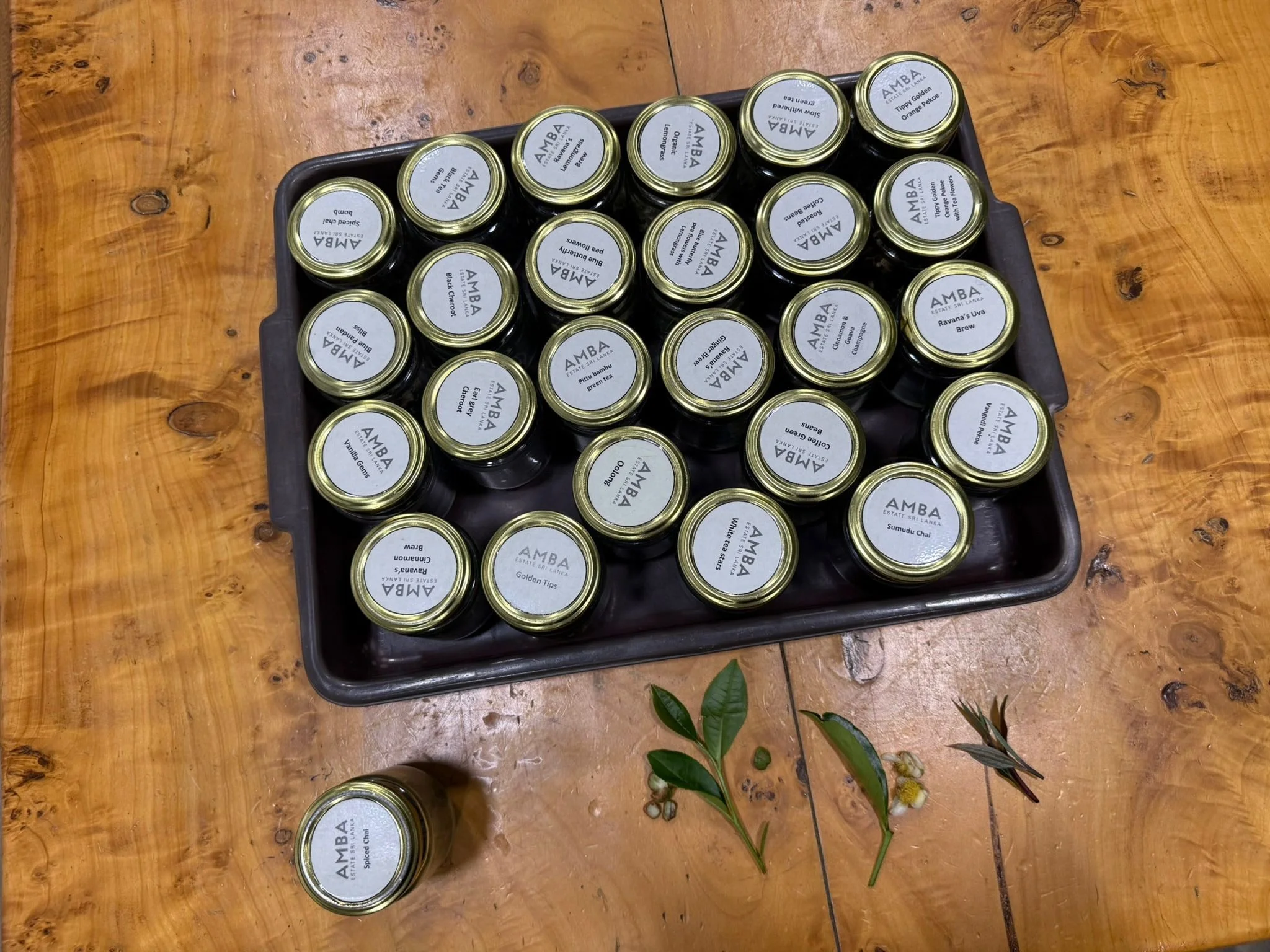
AMBA’s goal is to maximise incomes through tourism. By sharing 10% of the revenue directly with their employees as a bonus, many are eager to stay at AMBA. Their motto “if it grows, turn it into a product” currently applies for teas, coffee, jams, chutneys and handicrafts. On the agenda are cheeses, candles, soaps and much more. AMBA’s growth is often serendipitous, relying on skilled individuals who bring specific expertise to the estate.
AMBA Estate
WORTH KNOWING
As the world’s leading non-governmental organisation turning travel into impact, Planeterra helps communities use tourism as a catalyst to improve lives, protect environments, and celebrate culture. It acts as a trusted builder of communal well-being and pride, ensuring tourism benefits local members while providing travellers with better, more meaningful experiences.
The Ella Coffee Collective: With support from the Australian-funded Market Development Facility (MDF), AMBA purchased a coffee dryer to help local farmers process their cherries. The long-term goal is for these farmers to gain the independence to eventually own and operate their own processing units.
Six Stars Chutney Initiative: A Planeterra-funded cooperative helping senior tea pluckers build savings through value-added products. While AMBA currently handles the travellers' market, the final goal is for the women to own and run the business independently.
Artisanal handicrafts: AMBA provides a platform to sell artwork made from sisal and leather, with a vision for artisans to eventually manage their own branding.
The Challenge of Encouraging Entrepreneurship
Simon notes that an "entrepreneurial mindset" isn't always a given, especially in a culture that values a natural sense of contentment. Simon admires this peace, but he encourages building a financial "buffer." In a valley where the cost of living is volatile, specialised income protects the community's way of life and offers the next generation more options than the old plantation system ever did.
However, a significant hurdle remains: systemic market bias. Simon observes a difficult paradox—if he personally pitches a product to a high-end shop in Colombo, a sale likely follows. If a local villager does the same, they often face scepticism. While AMBA wants the community to be independent, the high-end market still favours a "Western" face.
As a result, Simon thinks it is difficult for locals to sell their chutneys in high-end shops in Colombo. It is more realistic, and at the same time still profitable, to sell their products in close by touristy areas. Tourists that are on a hike or exploring a town often love the ability to learn more about local, organic products as well as to buy those products after establishing a bit of a relationship. However, this direct-to-consumer independence is still a work in progress. For now, products continue to be sold under the AMBA umbrella, leveraging their established brand and market reach while the local initiatives build their own foundations.
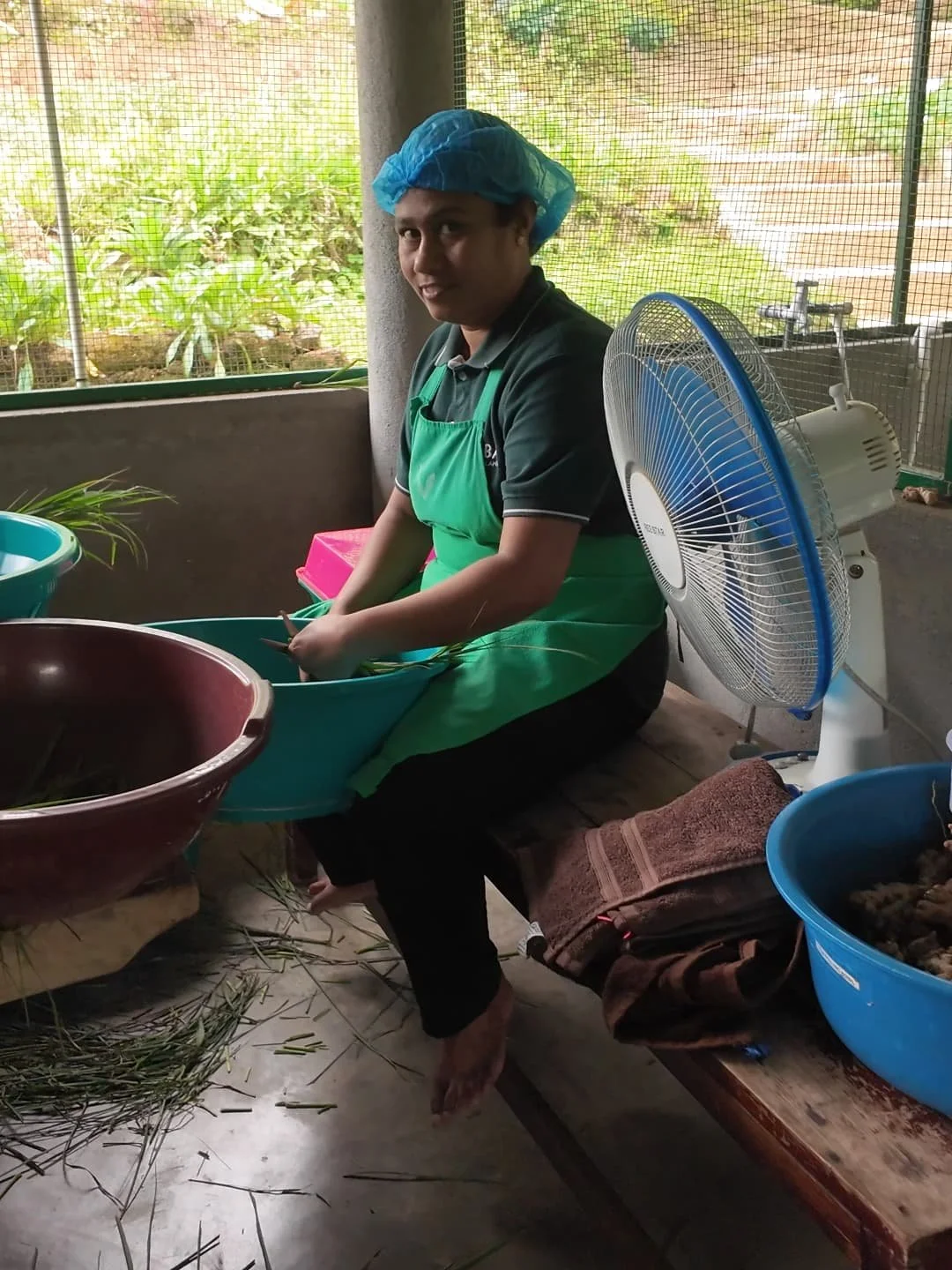
Tekanda Lodge and AMBA Estate offer two distinct blueprints for social progress. While Tekanda focuses on institutional education to bridge the rural-urban skill gap, AMBA pushes for entrepreneurial agency to break the colonial "commodity trap".
The difficulties they face are different in nature: Tekanda must protect the sanctity and privacy of its school from becoming a tourist spectacle, while AMBA must fight systemic market bias to prove that village specialists deserve the same respect as Colombo-based brands.
Ultimately, both projects prove that tourism doesn't have to be a top-down "aid" model. Whether through a classroom in Kathaluwa or creating chutneys in the Uva highlands, the goal is the same: give back to the community that they cherish by providing the next generation with knowledge and agency.
To learn more about how these organizations balance operational costs with social integration, read my deep dive into the financial frameworks of Tekanda and AMBA.