How to Source for Your Agri-stay: From Finding Specialists to
Co-Creating Products
May 12, 2026
Some agri-stays claim hiring locally is a social service. Others are more frank: it simply makes business sense. Then there are estates that take it further: if a product doesn't exist locally, they don't import it. Instead, they mentor a partner to create it.
Is the investment of time and money worth it? Let’s look at the different ways of sourcing.
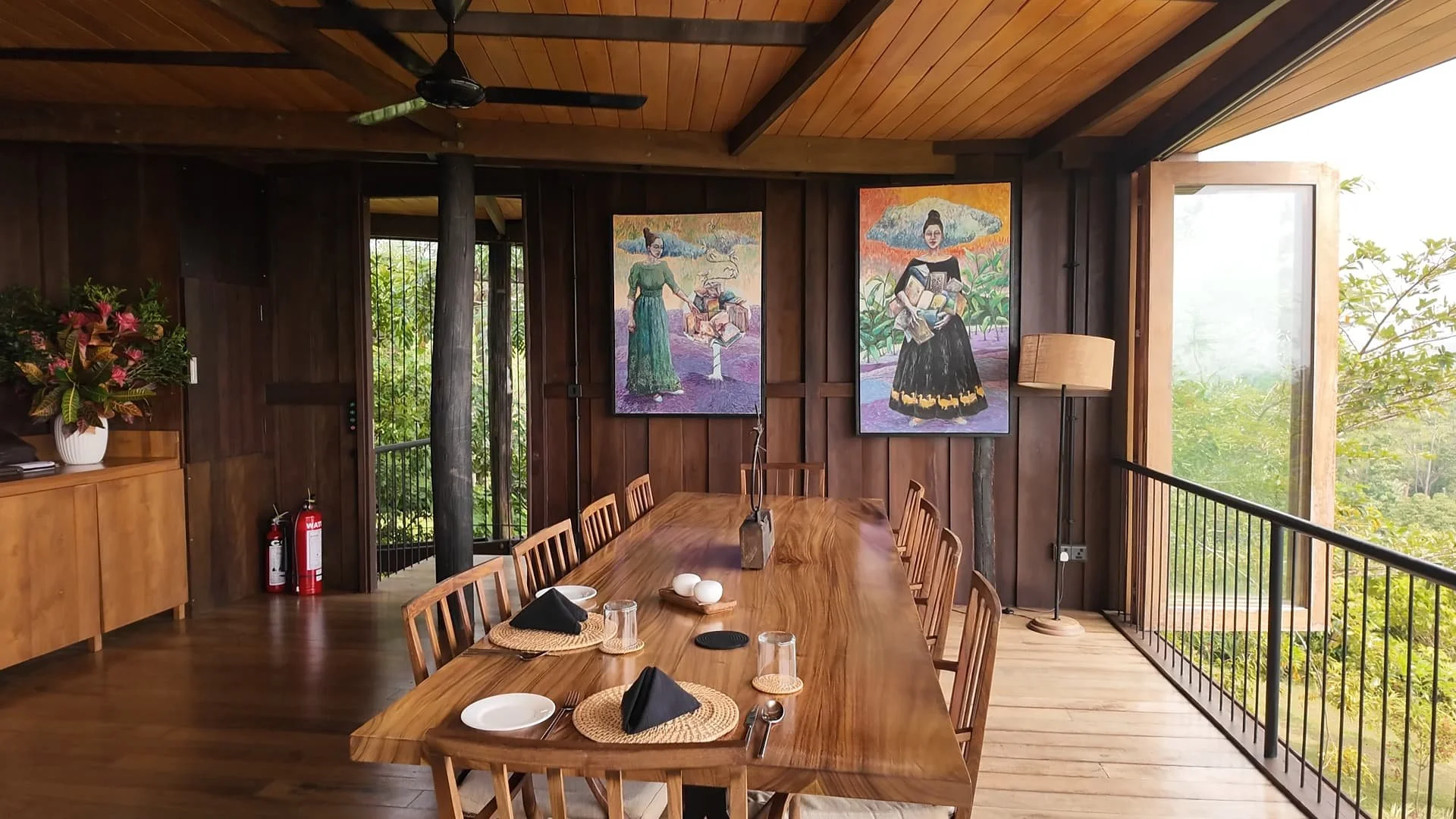
Trebartha East sourced art by visiting the homes and galleries of Sri Lankan artists.
Finding expertise: From carpenters to artists
Many agri-stays built their accommodation from scratch, including Tekanda Lodge and Trebartha East, where the owners hired architects and hosted carpenters at their estate during construction. For both accommodations, the goal was to focus on eco-friendly materials. Tekanda Lodge decided to construct a triple roof made out of iluk (dried wild grass), and Trebartha East used 8 different wood types in their accommodation. Sourcing locally is easy once you know the right people, but Patrick and Benny emphasise the need for a flexible attitude since timelines and delivery dates aren't always strictly met.
The brothers of their ‘cinnamon manager’ are carpenters and made their sun lounges.
The metal man down the road made their book cases.
All the art in The Round House is sourced directly from artists. Patrick and Benny are lovers of art, so they visited all the artists to build a relationship. At some point they discovered a family of squirrels in one of their art pieces. Now all their paintings have metal layer behind it to avoid this in the future. Read here more about how these agri-stays keep wildlife at a distance.
More importantly, Sri Lanka’s climate makes complex sourcing unnecessary. With so much produce grown in neighboring gardens and small farms, sourcing groceries locally is simply the most practical and efficient choice. The tropical growth rate is also a major advantage. If a specific area needs shade, you can plant a fast-growing species and see a functional canopy develop much quicker than in temperate climates. These are positive surprises to the Trebartha couple that makes building in Sri Lanka a wonderful experience.
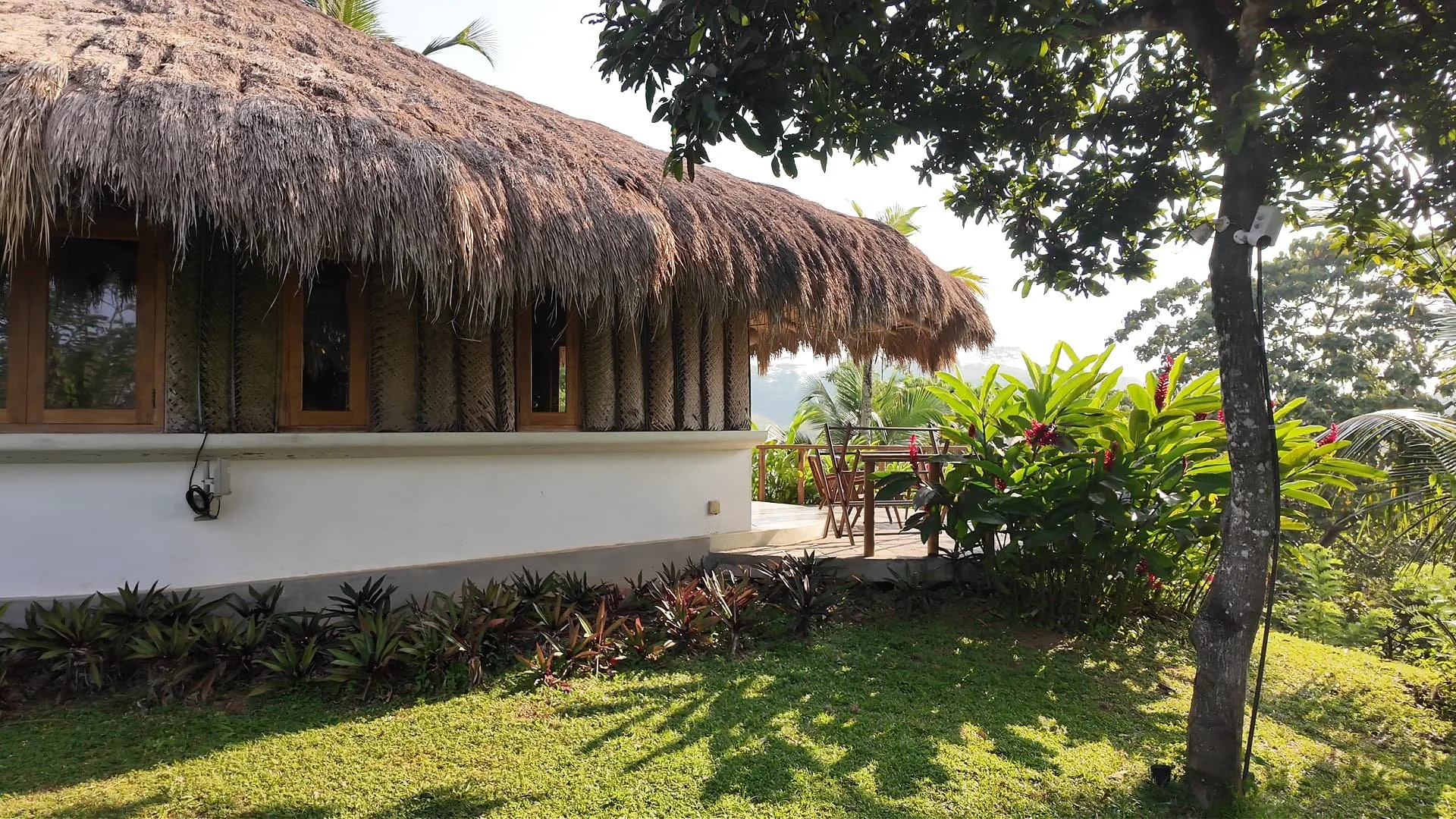
One of the Tekanda lodges with iluk as a roof.
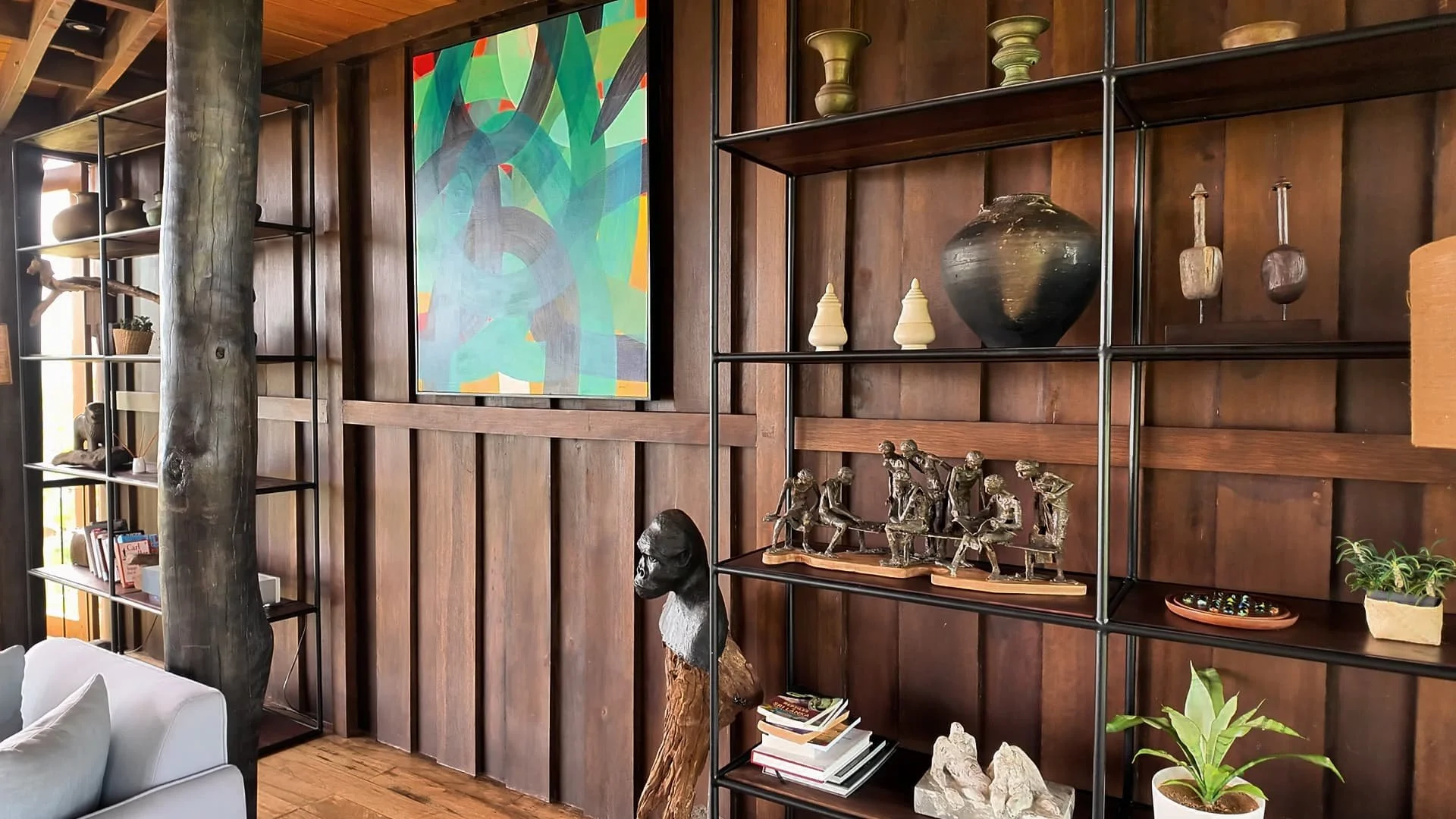
Book cases at Trebartha East made by the metal man down the road.
Personal expertise: From irrigation to electricity
While Trebartha and Tekanda’s owners are both from the United Kingdom and did not have experience in building or sourcing in Sri Lanka themselves, Go Yala Farm owner Sahan did. As a local who grew up in a farming family with friends in construction and working at a diving school, he has experience in farming, construction and tourism. Sahan credits much of his success to the extensive knowledge of his father; as an experienced farmer, his father’s advice remains the foundation for many of the farm's key decisions. For example:
The lake close to his farm is not only good for spotting water buffaloes and elephants, it is also rich in minerals. So, Sahan built an irrigation system to water his crops with lake water instead of tap water. Lake water carries natural minerals and sediment that act as a mild fertiliser, which tap water simply does not have.
Sahan was also the one who first installed electricity in the area when he built his first wooden lodges.
To smoothly drive to the farm, he constructed a road from the main concrete road to his farm.
Beyond these features that directly benefit nearby families, the neighbouring land goes up in value as well. Is there any competition? “No, farmers never compete”, he says—noting that the families and farmers are happy with the road and electricity, so they gladly help each other.
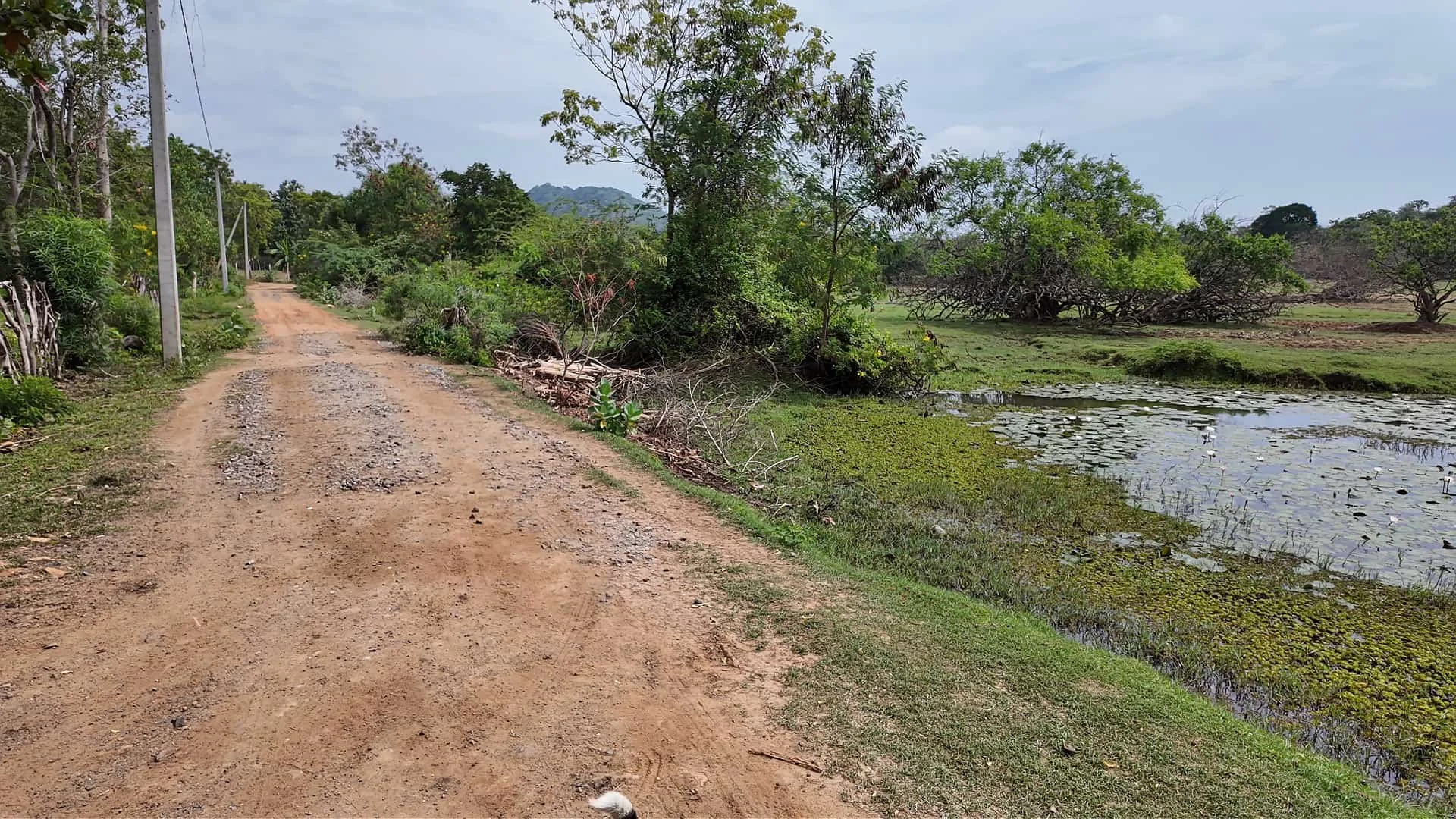
The path from the main road to the entrance of Go Yala Farm, constructed by owner Sahan himself.
Creating expertise: From tea machinery to lemongrass chopper
“We could have called China and got a machine in a couple of months,” Simon Bell, one of the co-founders of AMBA Estate, admits. Instead, AMBA spent years searching for Sri Lankan engineers to manufacture tea rollers and dryers to their specs. Their goal was simple: keep the investment—and the expertise—in the country.
Today, AMBA’s equipment comes from different places. While some high-tech machinery is still imported from China or Taiwan, much of their hardware is now sourced through a partnership with an innovative engineering firm in Kandy.
In reality though, the most impressive innovations have come from within. An employee named Ashok built a perfect lemongrass chopper using parts from a washing machine and an old drain pipe. According to Simon, it outperforms anything built by outside engineers. Ashok later applied that same ingenuity to build the estate’s coffee roaster.
After 20 years, AMBA has shown that the "slow path" of finding expertise within Sri Lanka can be difficult, and that sometimes your own team knows better what is needed. Since their mission is to increase Sri Lankan expertise, the hope is that other estates can eventually benefit from these local engineering breakthroughs too.
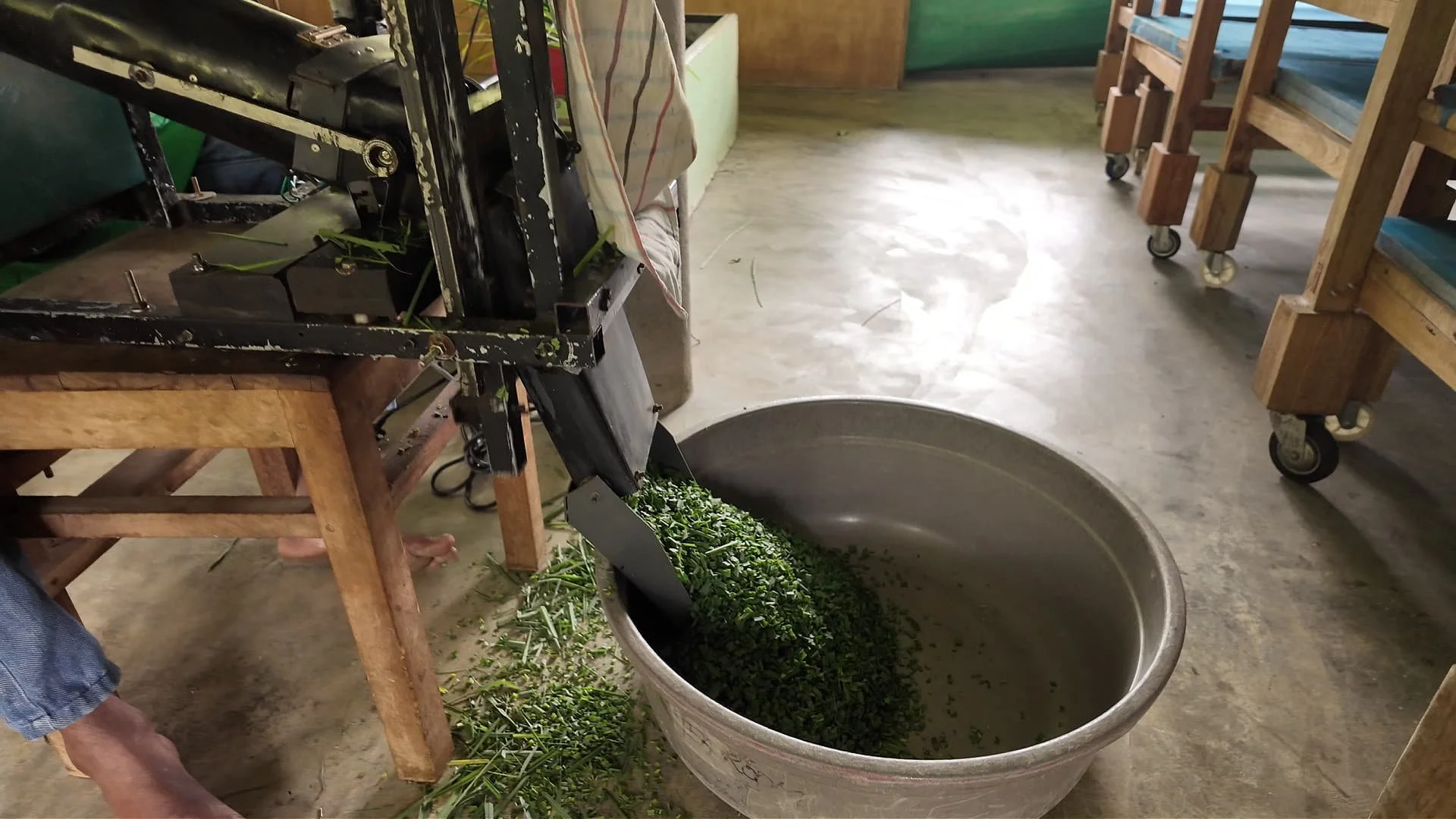
The lemongrass chopper made by Ashok.
So is local sourcing worth it? Across all three levels, yes, but for different reasons. Finding local expertise builds relationships and supports the local economy. Developing personal expertise, as Sahan shows, lifts an entire community. And creating expertise from within, as AMBA has spent 20 years doing, builds resilience that no imported machine can replicate. When the next crisis hits, the estates with a skilled local network around them will be the ones that make it through.